Premium Photoshop Editing On Every Scan.
49¢ most slides. Expert Slide and Photo
Scanning Since 2002.
4,000 ppi Extra High Res Scanning.
We can make PRINTS from your Slides.
Personally Processed with care in Wisconsin.
 Home
Home Order Forms
We Are A 100% USA Company
With ALL Work Done in the U.S.A.
Our two offices are both in Wisconsin and we have been in the scanning slides and photos and other mediums business since 2002. When we receive your scanning project, it never leaves our possession until we send it back to you.
Digitizing Your Paper Photos
Digitizing your paper photos preserves memories, makes them easy to share, and protects against fading or loss. We scan paper photos at 600 pixels per inch for high quality results. Use the tips below to package, clean, stack, and label your photos so they scan in the right order.
Why Paper Photos Need to Be Scanned Now
Most people assume their printed photographs are permanent. They are not. Every color photograph taken between roughly 1960 and 2000 used a dye-based chemical process to form the image. Those dyes are unstable. They fade, shift color, and deteriorate whether the photo is displayed or stored in a box in the dark.
The chemistry behind fading. Color photographic prints contain three layers of dye — cyan, magenta, and yellow — that combine to produce the full range of visible color. These dyes fade at different rates. Typically the cyan layer fades fastest, leaving prints with a characteristic orange-red or magenta cast. This is why old family photos often look warmer or more orange than you remember. The fading is a chemical process driven by oxidation, humidity, UV light, and atmospheric pollutants. It cannot be stopped — only slowed by keeping prints in cool, dark, low-humidity conditions.
Which prints are most at risk. Prints made at drug stores, one-hour photo labs, and discount retailers from the 1970s through the 1990s used the most unstable dye processes and can show significant fading within 20 to 30 years even under good storage conditions. Prints displayed in frames, left in hot cars, or stored in humid basements deteriorate the fastest.
Black and white prints are significantly more stable than color. A well-processed black and white print can last hundreds of years under proper storage. If you have a mix of color and black and white prints, prioritize color for scanning.
What Resolution Do You Need?
We scan paper photographs at 600 PPI. A standard 4×6 inch print scanned at 600 PPI produces a digital file of 2,400×3,600 pixels — roughly 8.6 megapixels. That is enough to make a high-quality 8×10 inch reprint, meaning you can enlarge a 4×6 to 8×10 without any loss of quality. Aall prints receive the same thorough 600 PPI scan.
What Photo Sizes and Types We Scan
We scan all standard paper photograph sizes: wallet prints (2.5×3.5″), 3×5, 4×6, 5×7, 8×10, panoramic, square, and oversized prints. We also scan photos removed from albums, photos with writing on the back, photos with mounting residue, and photos with minor surface damage. Severely damaged or stuck-together photos require you to decide if you want them scanned.
Packaging Your Paper Photos
Avoid rubber bands—they can bend and damage photos. Most people separate photos in envelopes large enough to hold them without bands. Photos should be flat for the best scan quality. Please don’t ship with shredded paper or anything that could contaminate the photos during scanning.
Please Clean Your Paper Photos
Wipe front and back with a very soft cloth before stacking. We don’t clean photos before scanning. Dust reflects the scanner light and can create white spots in the final image. If photos were glued into albums, gently brush off dried glue on the back as well.
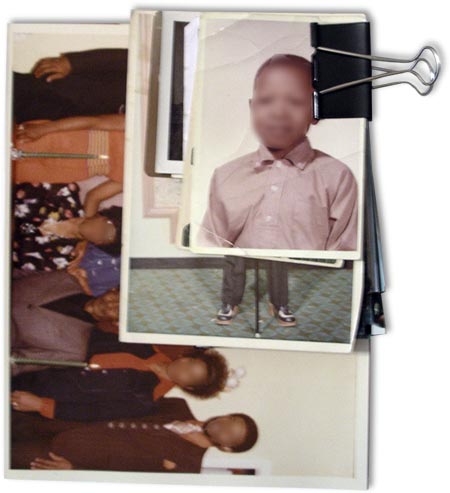
Mixing Different Photograph Sizes Together
We need your photos in stacks rather than individual envelopes so we can scan efficiently at our standard pricing. You can mix sizes in the same stack—no need to sort by dimensions.
Use binder clips (various sizes available at office supply stores) to keep mixed photos together. Then place the clipped stack into an appropriately sized envelope or plastic bag for extra protection.
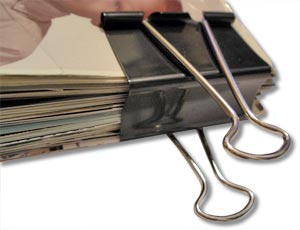
Use Plastic Bags for Organizing
Number each stack if a specific order is desired. If you don’t specify, we will number internally to keep everything organized during scanning.
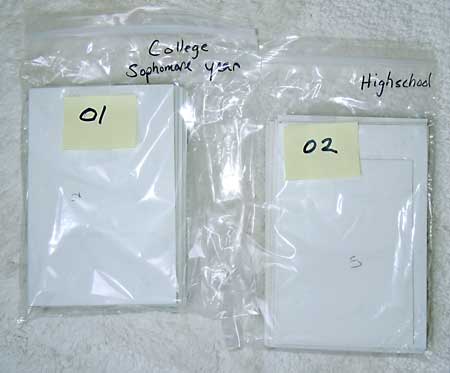
How Many Photos per Folder?
For organization, keep each "Folder" to no more than 200-300 photos to scan.
Numbering Paper Pictures: We Advise NOT to Number Them
We cannot guarantee image numbering will match photo numbers. We will go in order as much as possible. Label stacks according to the chapters you want (e.g., 3 stacks for 3 chapters). If more than one stack belongs to a chapter, label them #3a, #3b, #3c so we know they go together.
Important: Don’t number across all chapters from 1–500 if they’ll be split into separate folders. Each folder restarts at #1. Avoid lettered numbers on individual photos (like 45a/45b) because it breaks logical numbering in our system.
Write on the back in pencil only—never ink. Permanent markers also can offset onto other photos and ruin images.
Photos in Albums — What to Do
Magnetic albums (sticky pages with a plastic overlay) are the worst for photos. The adhesive yellows and becomes acidic over time. If photos are stuck in a magnetic album, they need to be removed carefully. Do not send albums to us. All photos must be loose.
Pocket albums (clear plastic sleeve pages) — photos can usually be slid out easily. Remove them and stack them.
Corner-mount albums — gently lift the paper corners and slide the photo out. These are the easiest to deal with.
Glued or taped photos — These might best be removed be cutting the pages around the photos.
Frequently Asked Questions
Do you charge more for larger photo sizes?
Of course. Larger photos require more time to scan. Time is money. There are just three catagories: up to 4x6", up to 5x7", up to 8x10".
Can you scan photos that are stuck together?
We can scan the "top" photo. It has to be up to you to risk damagin your photos.
What about photos with writing on the back?
Writing on the back does not affect scanning since we scan the front face. We do not provide scans of the back.
Can you fix faded or damaged photos?
Our standard Photoshop color correction compensates for mild fading. We do this for every photo that we scan. No extra charge. We generally can improve every scan.
Should I remove photos from albums before sending?
Yes. Do not send full or partial album pages. All photos must be loose and ready to put in the scanner.
Start Your Order • Read Our Reviews