
 Home
Home Order Forms
Mold and Mildew on Slides — Can They Still Be Scanned?
Finding mold or mildew on your slides is alarming, especially when the slides contain irreplaceable family images. The first instinct is usually to clean them. That instinct is wrong, and acting on it causes the permanent damage you are trying to prevent. This page explains what mold actually does to slide film, what you should and should not do, and what to realistically expect if you send moldy slides for scanning.
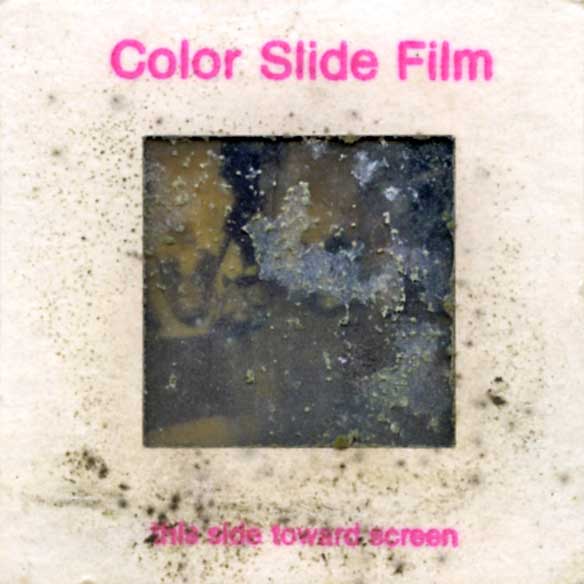
⚠ Required step for moldy slides: Before shipping any slides with visible mold or mildew, take photos of the affected slides and email the images to us for approval. We will review them and tell you whether scanning is likely to recover anything useful. Sending severely mold-damaged slides without prior contact may result in your order being returned unscanned.
What Mold Does to Slide Film
A 35mm slide has several layers. From front to back: the mount (cardboard or plastic), sometimes a cover glass, the film base, and the emulsion layer where the image lives. The emulsion is a thin layer of gelatin containing the color dyes that form the image.
Mold feeds on organic material. Gelatin emulsion is organic. Cardboard mounts are organic. When mold establishes itself on a slide, its filaments — called hyphae — can penetrate through the mount and into the emulsion layer. Once inside, the hyphae consume the gelatin, and the dyes suspended in that gelatin go with it. This creates permanent, irreversible image loss in the colonized areas.
Mold sitting on the surface of the mount has not necessarily damaged the emulsion. Mold that has grown visibly across the film surface itself — fuzzy patches directly on the image area — has very likely penetrated the emulsion and caused permanent damage there. Surrounding areas may still be intact.
Why You Should Not Clean Slides Yourself
The mold filaments that penetrate the emulsion are physically entangled with the gelatin. Rubbing the film surface — with a cloth, cotton swab, or any other material — does not simply lift the mold off. It tears the entangled hyphae through the emulsion, removing and smearing dyes along with the mold material. The rubbing causes more visible damage than the mold alone would have produced.
There are professional film cleaning techniques using controlled solvents under specific conditions. These are not DIY procedures. If someone advises you to wipe mold off slides with isopropyl alcohol, a microfiber cloth, or any household product, that advice will destroy the image. Send the slides as they are.
Mold vs. Mildew — What You Are Actually Seeing
Mildew
Typically a flatter surface growth. Downy mildew begins as yellow spots that turn brown. Powdery mildew appears as whitish patches, eventually yellowing and darkening to brown or black. Mildew is generally less deeply invasive than mold and sometimes causes less emulsion damage — but it should still not be wiped or rubbed.
Mold
Produces the fuzzy, three-dimensional filamentous growth. Comes in many colors: orange, green, black, brown, pink, or purple. The fuzzy appearance indicates active filament growth, which means penetration into the emulsion is likely if the mold is growing directly on the film surface. Grows wherever humidity is high and organic material is present.
What to Do Right Now
Move the slides out of the humid environment. Mold requires moisture to grow. Dry indoor air at normal room temperature will slow or stop active growth. Do not put slides in a sealed plastic bag — that traps residual moisture. A cardboard box in a dry room is better.
Separate affected slides from the rest. If only some slides in a collection show mold, segregate them. Active mold can spread to adjacent slides, especially if the original humid storage conditions are unchanged.
Do not freeze slides. The freeze-thaw cycle causes condensation on the film surface which can accelerate damage. Room-temperature dry storage is safer.
Contact us before shipping if mold is extensive. If a significant portion of a collection shows active mold growth, email us photos of the affected slides first. We can give you a realistic assessment of what scanning is likely to recover before you spend money on shipping.
What Scanning Can Recover
Mold on the mount or frame only — typically no visible effect on the scan. The film image was never touched.
Mold on the emulsion surface, partially penetrated — the scan will show some degradation in the affected areas: visible texture, slight haziness, or small areas of color loss at the mold spots. The surrounding image is often intact and usable.
Heavy mold colonization of the emulsion — permanent image loss in those areas. No scanning technique recovers information from areas where the emulsion has been consumed. We can still scan these slides and deliver whatever remains, but we will tell you honestly what the result looks like before finalizing your order.
In every case: an imperfect digital record of a damaged slide is permanently better than the original continuing to deteriorate in a box. Mold will not stop on its own. Every year of further storage is more damage.
Related Pages
Warped and bent slides — causes and scanning
Can warped slides be scanned? Realistic outcomes by severity
Free Photoshop editing on every scan
Image Rescue — if another service scanned your slides poorly